




In compact homes and apartments, your living room often moonlights as a dining area, home office, and play zone.
- Diagnose the Space & Rank Your Priorities
- Pick a Space-Savvy Table Shape
- 1. Round Tables: Easy to Move Around
- 2. Oval Tables: Longer and Softer
- 3. Rectangular Tables: Neat Against a Wall
- 4. Square Tables: Simple and Small
- 5. Drop-Leaf & Gateleg Tables: Foldable and Flexible
- Light Designs Feel Less Bulky
- Choose the Right Placement
- Use Design Tricks to Stretch the Room
- Let Furniture Do Double Duty
- Think Vertically When You’re Short on Space
- Final Thought: It’s All About Flow
Squeezing a dining table into the mix can feel like trying to park a bus in a bike lane—but with the right layout tricks and furniture choices, you can pull it off stylishly and comfortably.
Contents
Diagnose the Space & Rank Your Priorities
Before you even start browsing dining tables, take a moment to study the room you’re working with.
Start With a Tape Measure
Break out a measuring tape and jot down the full dimensions of your living room, then subtract space for essential circulation paths. As a rule of thumb:
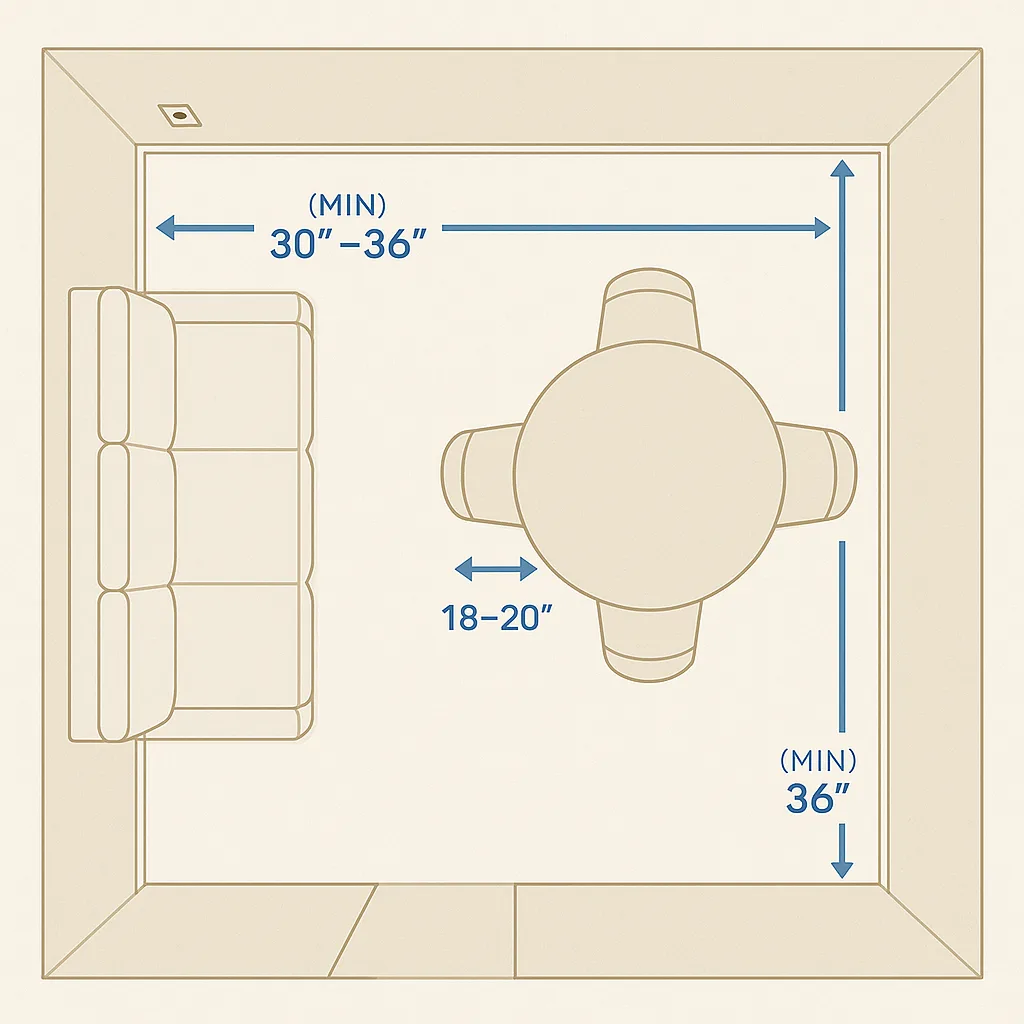
- Leave at least 30–36 inches for a main walkway (enough for someone to pass through without twisting sideways).
- Reserve 18–20 inches behind every chair so it can be pulled out comfortably.
- Aim for a minimum 36-inch buffer between the edge of your table and any fixed piece of furniture (like a sofa back, wall, or media unit).
Try This Fast Formula:
Room width or length – 6 feet = usable space for furniture
This quick subtraction gives you a realistic view of what’s left after accounting for walking lanes.
Understand How You Use the Room
Now ask yourself:
- Do you eat full meals at the table every day, or is it mostly used for takeout and laptops?
- Do you host guests regularly, or do you just need a cozy spot for two?
- Is the living room also doing triple duty as an office or playroom?
Your answers will shape whether you need a compact table that disappears between meals—or one that anchors the space as a dining hub.
Map It Out With Tape
Before committing to a table size or shape, mark the footprint with painter’s tape on the floor. It’s the easiest way to test how different dimensions feel in real time. Walk around it. Pull out chairs (or use boxes as stand-ins). This step alone can prevent a lot of “I didn’t think it’d be this big” moments.
Source: West Elm, Better Homes & Gardens
Pick a Space-Savvy Table Shape
In a small living room, your dining table’s shape can help make the room feel more open—or more crowded. Choose one that fits your layout and your everyday needs.
1. Round Tables: Easy to Move Around
- Round tables are great for tight spaces. They don’t have corners, so they’re easy to walk around. They work well in square rooms or near a sofa. A 36–44 inch round table fits 2–4 people without taking over the room.
2. Oval Tables: Longer and Softer
- Oval tables are like round ones, but they seat more people. Their curved edges help keep the space feeling open. They’re best in longer rooms and look good with pedestal bases for extra leg space.
3. Rectangular Tables: Neat Against a Wall
- This shape fits nicely along a wall or window. Great for narrow rooms, rectangular tables offer lots of seating without taking up the whole space. Choose one about 28–30 inches deep.
4. Square Tables: Simple and Small
- Square tables are compact and easy to fit in a corner. They’re ideal for 1–2 people and can double as a work table. Perfect for small apartments or solo living.
5. Drop-Leaf & Gateleg Tables: Foldable and Flexible
- These tables fold down when not in use and open up when needed. Great for small or multi-use spaces, they’re useful when you have guests or need to save space. Look for stylish versions to add charm.
Light Designs Feel Less Bulky
No matter what shape you choose, pick one that feels visually light and airy:
- Glass tops = less visual bulk
- Slim or tapered legs = more airiness
- Raised bases (instead of solid skirts) = more floor visibility
These design tricks make a table feel like it takes up less room—even when it doesn’t.
Choose the Right Placement
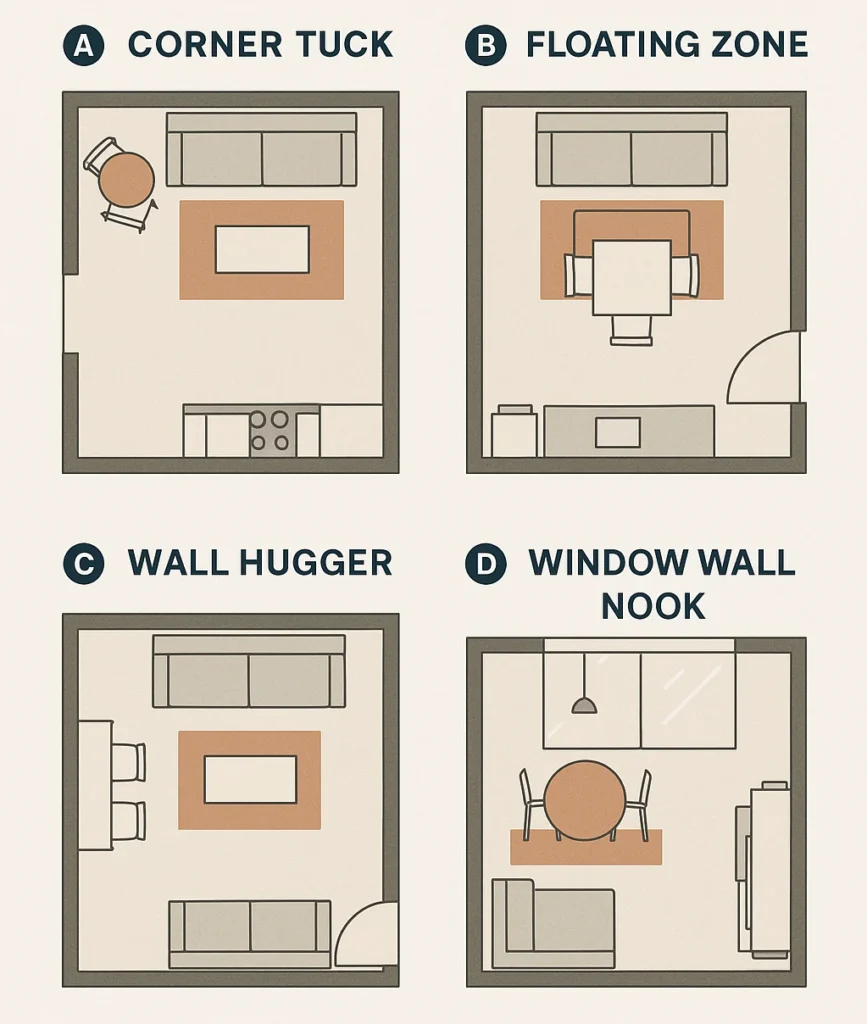
The best layouts weave dining in as a natural part of the room’s flow, not an awkward add-on. Here are four proven placement strategies that maximize space and style:
🅐 Corner Tuck
Tuck a small round or square table into a corner with two chairs—just enough for daily meals or coffee chats. This setup works especially well next to:
- A window (hello, natural light!)
- Open shelving or wall-mounted storage
- A banquette or built-in bench to save even more space
Why it works: It turns an unused corner into a cozy, intentional nook—without disrupting the rest of the room.
🅑 Floating Zone
In open-concept rooms, try floating the table between the living area and kitchen. It acts as a soft buffer between zones and helps organize the space visually.
- Use a rug to ground the dining area
- Hang a pendant light above to anchor it
- Keep chairs light and movable so they don’t block flow
Pro move: Floating the table diagonally (if space allows) can feel even more dynamic.
🅒 Wall Hugger
Short on floor space? Push a narrow rectangular table up against the longest wall.
- Add chairs on three sides, or
- Use two slim benches that tuck in completely
- Style it with wall art or a floating shelf above to turn it into a multifunctional console
Why it works: It “hugs” the perimeter instead of filling the middle of the room—perfect for long, narrow living areas.
🅓 Window Wall Nook
If you’re lucky enough to have a large window or patio door, place a round table in front of it with two or three slim-profile chairs.
- Enjoy the view while you eat
- Let the light bounce around the room
- Add a pendant or sconce for evening ambiance
Bonus: The glass beyond the table creates the illusion of depth, making the room feel bigger and brighter.
Use Design Tricks to Stretch the Room
Even in a small room, the right design tricks can make things feel more open and balanced.
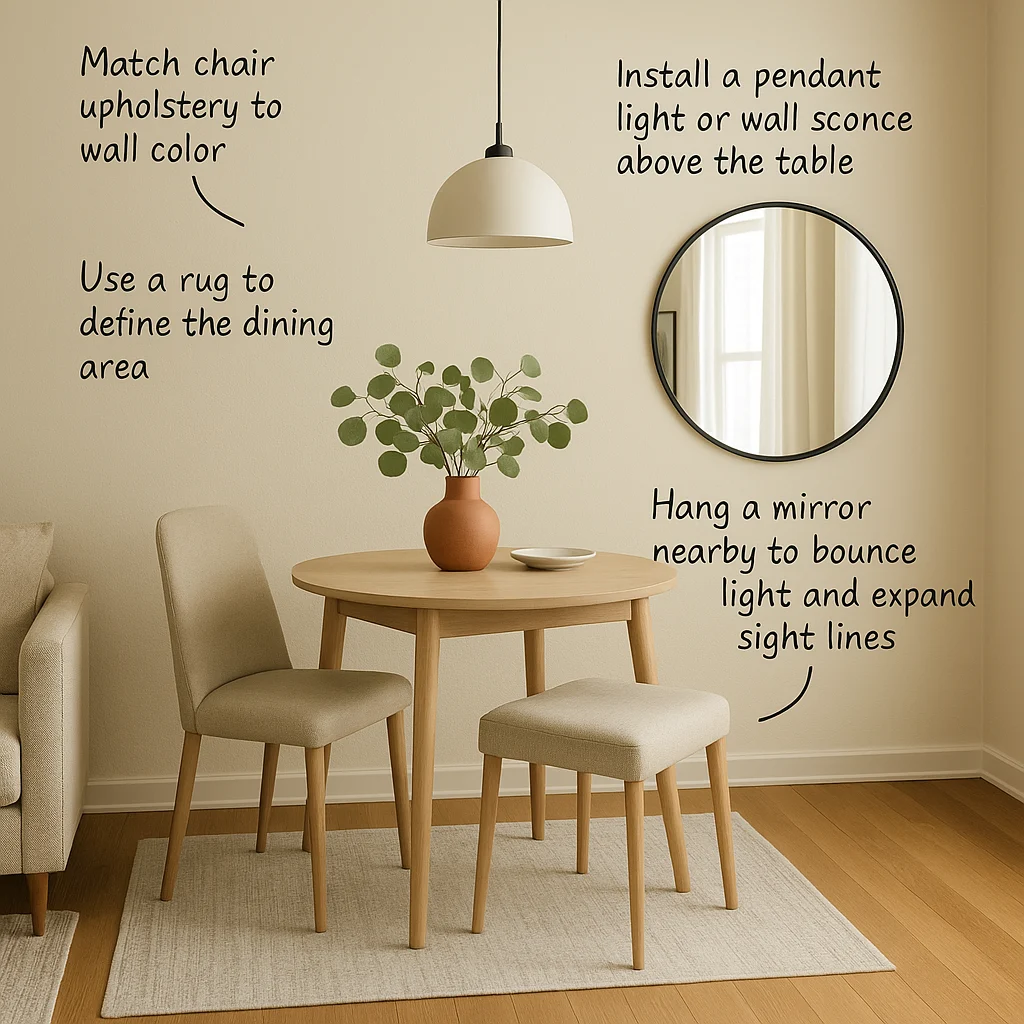
1) Match Your Furniture to the Walls
When your chairs or table are similar in color to the walls, they blend in and don’t stand out. This makes the room feel less crowded. For light walls, try pale wood or whitewashed finishes. For dark walls, try black, deep wood, or metal.
2) Use a Rug to Show the Dining Area
A rug helps mark the dining zone and makes the space feel more organized. Choose a rug that’s about 24 inches bigger than your table on all sides. Go for flat or low-pile rugs so chairs slide easily.
3) Add a Light Over the Table
A pendant or wall light above the table creates a cozy feel and draws the eye up. It makes the table feel like its own space. Add a dimmer so you can go from bright meals to soft evening light.
4) Hang a Mirror to Reflect Light
A mirror near or across from a window bounces light around and makes the room feel bigger. Round or oval mirrors soften the look. A large mirror wall can even blur the edge of the space.
✨ Mirrors are like windows you can add wherever you want.
Let Furniture Do Double Duty
In a small living room, every piece should work harder—not just look good. That’s where multifunctional furniture comes in. With the right choices, you can layer in a dining area without piling on clutter.
| Item | How Does It Work |
|---|---|
| Bench | Slides under the table when not in use to keep the floor clear. |
| Storage Ottoman | Works as a seat, footrest, or table, and stores items inside. |
| Sofa Back | Acts as a soft divider when the sofa is floated—not pushed against the wall. |
| Extendable Table | Expands when guests arrive, stays compact the rest of the time. |
| Console Table | Sits behind the sofa—add folding chairs to create a quick dining setup. |
Think Vertically When You’re Short on Space
When your floor space is limited, start using your walls. Going vertical helps you fit more into the room without making it feel crowded.
Add Shelves Above the Table
Put one or two shelves above your dining table to save space and add storage.
You can use them to:
– Hold dishes or glasses
– Show off plants, art, or candles
– Make the wall feel more styled
Tip: Choose shelf colors or materials that match your table to keep it looking neat.
Try a High-Back Bench
A tall bench along the wall can work as a:
– Comfy seat for meals
– Divider between dining and living areas
– Storage spot under the seat
Plus, it makes your setup feel taller and more complete—especially if you hang art above it.
Use a Bar Table Under a Shelf or Window
A slim bar-height table with stools fits well under a shelf, window ledge, or nook.
– Push stools under it when not in use
– Use the shelf above for mugs or lighting
Bonus: It can also be your work desk or coffee bar during the day.
Final Thought: It’s All About Flow
Fitting a dining table into a small living room isn’t about forcing more furniture into the room—it’s about shaping how the space feels and functions. The key isn’t just size or shape—it’s flow.
When you can walk through the space without bumping into corners, when chairs pull out easily, and when the table feels like it belongs—not just borrowed space—you’ve done it right.