Smart Ways to Fit Two Beds in a Small Room (Without Feeling Cramped)
Fitting two beds in a small room might seem like a puzzle, but with the right layout and a few smart design tricks, it’s totally doable.
Start With the Numbers: Measure First, Then Mock It Up
Before you move a single piece of furniture, take stock of the room’s dimensions. Three measurements will shape your layout—and skipping them is the fastest route to a setup that feels cramped or awkward.
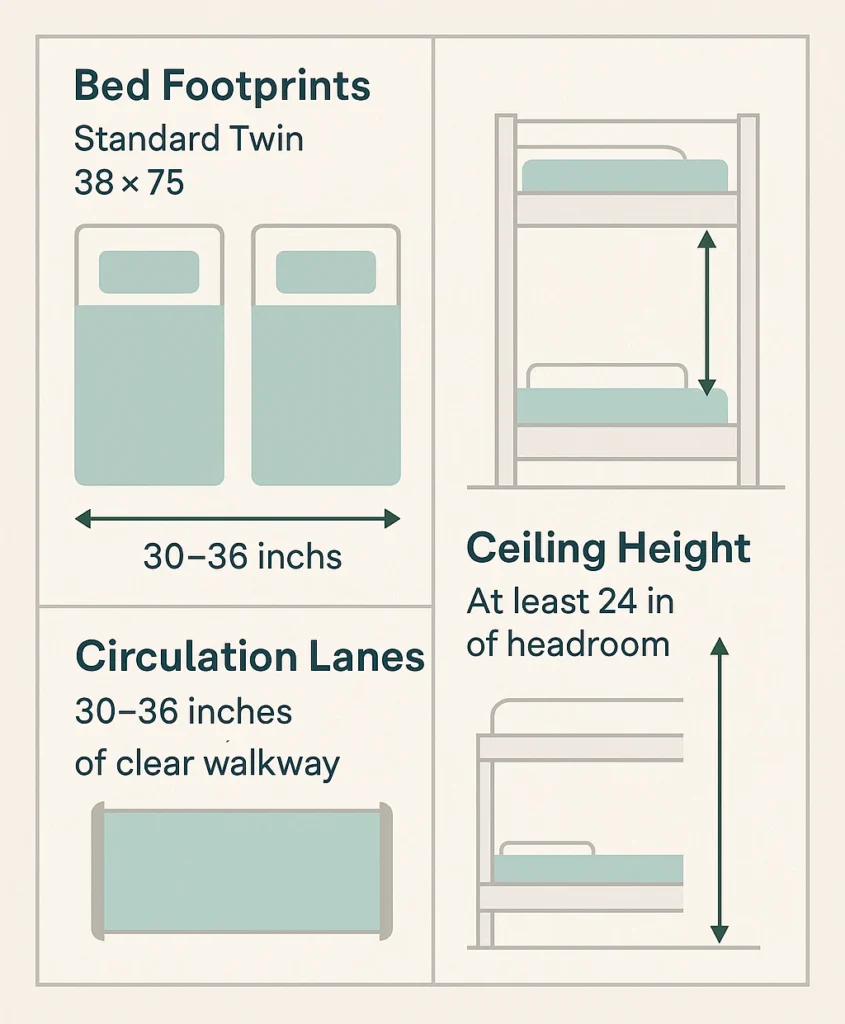
✔️ Bed Footprints
The standard twin (38″ × 75″) is the go-to size for shared rooms. Twin XL mattresses add 5″ of legroom (great for taller sleepers), but also take up more space. Don’t forget to add 2–3 inches on each side for the bed frame and bedding overhang.
✔️ Circulation Lanes
Designers recommend keeping 30–36 inches of clear space around and between furniture. This gives you enough room to walk comfortably. In tighter spots, you can go as narrow as 24 inches—but only in low-traffic areas like the edge of a wall.
Source: houzz.com
✔️ Ceiling Height
Planning on bunk beds or lofts? You’ll need a minimum of 24 inches between the top mattress and the ceiling for safe, comfortable clearance. In 8-foot rooms, this generally limits you to mid-height bunks around 60–62 inches tall.
Source: maxtrixkids.com
🛠 Pro Tip: Sketch a quick floor plan to scale—or better yet, outline beds with painter’s tape on the floor. This lets you spot problems before you commit to any furniture.
Choose the Right Bed Configuration
Your bed layout will shape how the room feels and functions. Whether you’re trying to save space, give kids their own zones, or allow for flexible use, the right setup makes all the difference.
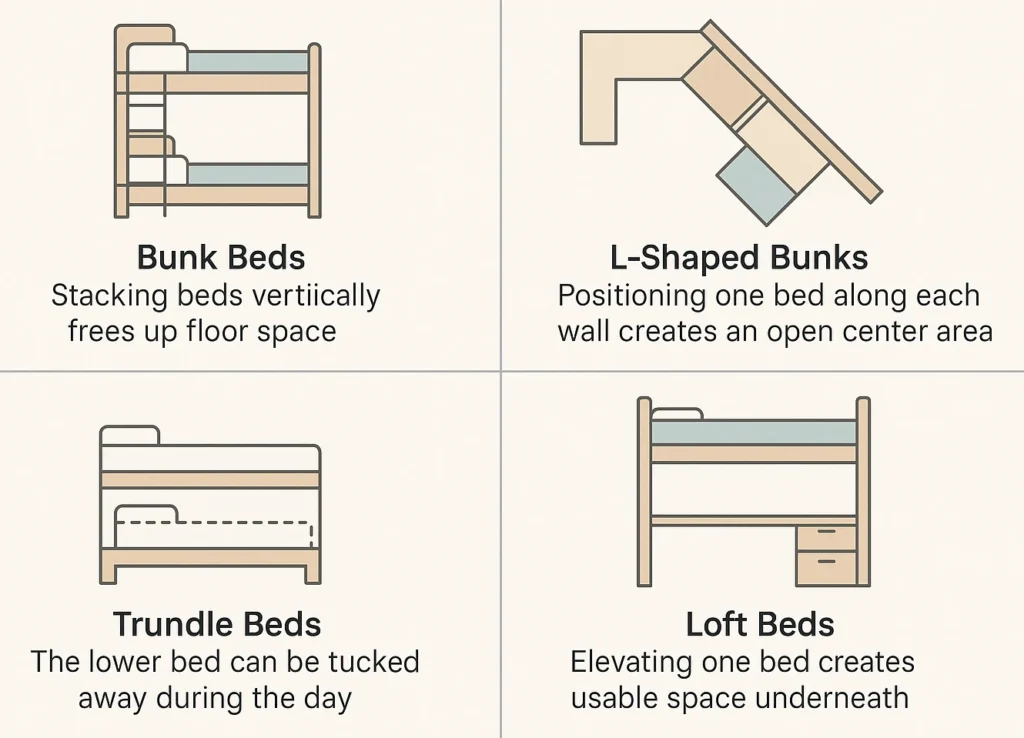
1. Bunk Beds
The classic space-saver. Stacking beds frees up floor space for play or desks, especially helpful in compact kids’ rooms. Just make sure there’s at least 30 inches of clearance for ladder access and that safety standards for guardrails and slats are met.
2. L-Shaped Bunks
Place the top and bottom beds at a right angle, usually in a corner. This layout feels more open and is easier to access—especially for younger kids—and allows space for a shared rug or corner table.
3. Trundle Beds
Perfect for sleepovers or guest rooms, trundles hide one bed beneath another. You get full daytime floor space and a second sleep zone at night. Just make sure there’s enough clearance to fully roll out the lower bed.
4. Loft Beds
Elevate one bed to reclaim the floor below for a desk, lounge, or storage. Ideal for tweens, teens, or small spaces where one bed needs to multitask. Choose models under 62 inches high if your ceiling is 8 feet or lower.
Sources: Source: nestinsmall.com, coohom.com
Ceiling Tip: Low ceilings (under 8′)? Go with “low bunk” or “mid loft” models maxing out at 65″ high. That gives enough headroom for sitting up—without making the room feel closed-in for adults.
Innovative Layouts for Two Beds in a Compact Room
| Layout | Best Room Shape | Minimum Room Size | Floor Space Saved | Best For |
|---|---|---|---|---|
| L-Shaped Configuration | Square / Nearly Square | 10′ × 10′ | Moderate | Young kids / Shared playrooms |
| Head-to-Head / Foot-to-Foot | Rectangular | 8′ × 13′ | Minimal | Guests / Pre-teens |
| Parallel w/ Central Storage | Rectangular / Wide Square | 9′ × 12′ | Minimal | Teens / Guests / Symmetry lovers |
| Bunk Beds with Integrated Storage | Narrow / Square | 8′ × 10′ | High | Kids / Vacation homes |
| Loft Bed Over a Standard Bed | Rectangular / L-Shaped | 8′ × 10′ | High | Older-younger siblings / Flexible use |
| Murphy Beds for Flexibility | Rectangular / Multi-use | 9′ × 11′ | Maximum | Dual-purpose rooms / Flex use |
1. L-Shaped Arrangement
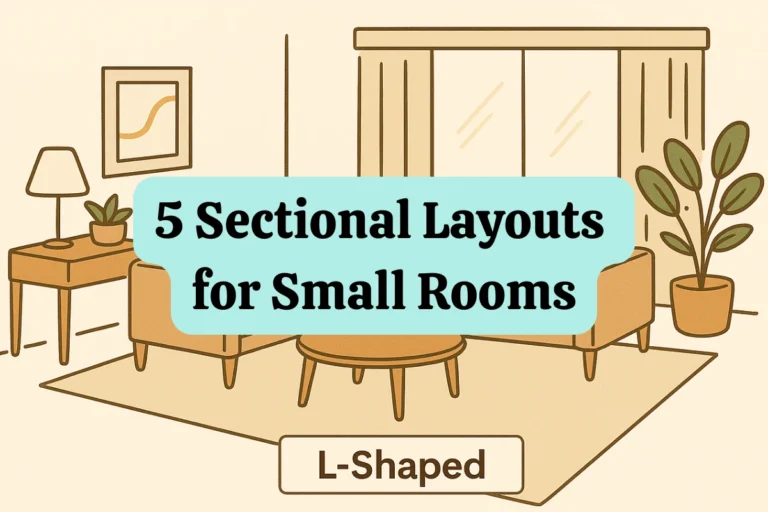
The L-shaped setup places two beds at right angles in a corner of the room, forming a functional “L” shape. It’s one of the smartest ways to maximize corner space—an area that often goes underused—and it instantly opens up the room’s center for movement, shared play, or study.
Why It Works
- Efficient layout: The beds hug the walls, freeing up the middle of the room.
- Individual zones: Each sleeper gets a defined corner without needing dividers.
- Face-to-face visibility: Ideal for siblings who like to chat or stay close.
- Ground-level comfort: No climbing or bunk ladders—perfect for toddlers.
Room Requirements
| Requirement | Details |
|---|---|
| Ideal Shape | Square or nearly square |
| Minimum Size | 10′ × 10′ |
| Bed Footprint | Each twin bed needs ~78″ × 39″ |
| Clearance Tip | Leave 30″ between bed ends or furniture |
Design Enhancements
- Corner table or cubby in the “elbow”
- Matching bedspreads for cohesion
- Wall-mounted lights or shelves above each bed
- A shared area rug for warmth and unity
🛋️Real-Life Example
Room Size: 10′ × 10′
Setup: Two twin beds form an L in the far corner. A 5′ round rug centers the space. A shared 24″ corner table holds a lamp and books, with bins under the beds for toys and off-season clothing. Wall-mounted ledges act as individual bookshelves.
Result: The room feels open, balanced, and kid-friendly, with ample floor space and zero need for bunk ladders.
2. Head-to-Head or Foot-to-Foot Arrangement
If you’re working with a long, narrow room and prefer to keep both beds on the ground, this layout offers a space-smart alternative to side-by-side or stacked setups.
It places the beds in a straight line—either with their headboards touching(head-to-head) or their footboards aligned (foot-to-foot).
Head-to-Head
Place the beds along a single long wall with their headboards adjacent. This creates a sense of separation between the sleeping areas while leaving the opposite wall free for storage, desks, or even a long window bench.
- Works best in rooms at least 10 feet wide, especially if each bed is flanked by a wall or shelving.
- A shared headboard or divider shelf between the beds can add privacy and function.
- Ideal for teens, dorm-style setups, or twin guest rooms.
Foot-to-Foot
Instead of side-by-side, place the beds end-to-end, running lengthwise along a central axis or wall. This layout is perfect for tight rectangular rooms where lateral space is limited.
- You’ll need a room length of at least 13 to 14 feet to accommodate two twins plus circulation.
- Great if you want to keep the beds visually balanced or centered under a window or artwork.
- Consider adding a low bench or shared storage chest at the meeting point for functionality.
🛋️ Design Tips
- Use a low bench, table, or shelf between beds
- Wall-mounted lights to save floor space
- A long runner rug to unify the zones
- Shared headboard for cohesion
🏡 Real-Life Example
Room Size: 8′ × 14′
Setup: Two twin beds are placed head-to-head along the long wall, divided by a 30″ low bookshelf. Each bed has its own wall-mounted sconce, and a floating desk lines the opposite wall.
Result: A streamlined and spacious layout that supports two elementary-age siblings with plenty of open space, storage, and function.
3. Parallel Placement with Central Storage
This layout positions two beds along opposite long walls, running parallel to one another. A shared piece of furniture—such as a low dresser, cubby shelf, or compact desk—sits between them, acting as both a divider and a practical centerpiece.
It’s a balanced, functional layout that naturally divides the room and works especially well for tweens, teens, or guests.
Why It Works
- Dual-purpose center: The middle furniture acts as both divider and storage.
- Full use of walls: No space is wasted on either side.
- Visual balance: Matching beds, art, and lighting bring harmony.
- No elevation needed: Everything remains grounded and accessible.
🧭 Room Requirements
| Requirement | Details |
|---|---|
| Ideal Shape | Rectangular or wide square |
| Minimum Size | 9′ × 12′ |
| Bed Footprint | Two 39″-wide beds + 24–36″ between |
| Clearance Tip | Leave 24″ between beds and central unit |
🛋️ Furniture Ideas for the Center
- Low dresser or cube shelf with bins
- Compact desk for homework or drawing
- Shared nightstand with a lamp or books
- Wall-mounted ledge for a floating feel
🏡 Real-Life Example
Room Size: 9′ × 12′
Setup: Two twin beds face each other along opposite walls. A 30″ cube shelf sits in between, topped with a lamp and charging station. Above each bed are wall sconces and floating shelves.
Result: The room feels symmetrical and well-zoned, with plenty of space for movement, storage, and comfort for two pre-teens.
4. Bunk Beds with Integrated Storage
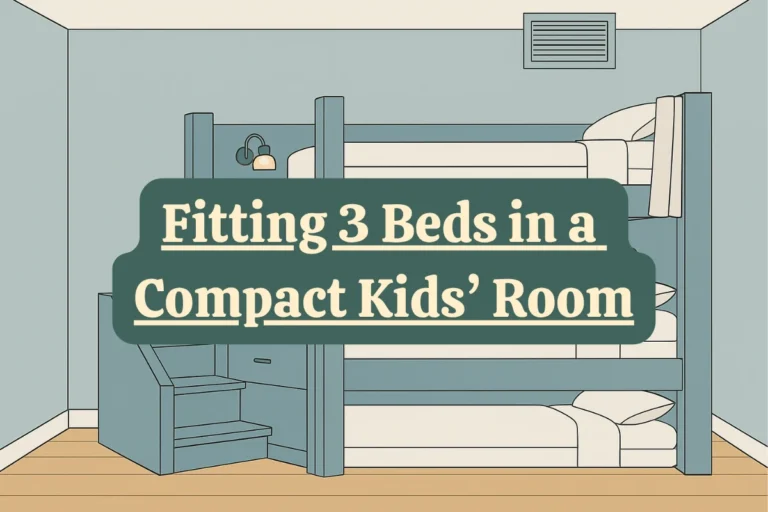
When you’re short on floor space but have the ceiling height, bunk beds with built-in storage can be a total lifesaver.
These vertical sleep systems don’t just stack beds—they often include drawers, shelves, stair storage, or even a built-in wardrobe or desk, turning one furniture footprint into a multitasking powerhouse.
Why It Works
- Vertical stacking saves space: Great for small rooms that need open floor areas.
- Everything in one unit: Drawers in stairs, shelves by the pillow—no need for extra furniture.
- Defined sleep spaces: Each level can have its own lighting and decor.
- Decluttered look: Less scattered furniture = more visual calm.
🧭 Room Requirements
| Requirement | Details |
|---|---|
| Ideal Shape | Narrow or square |
| Minimum Size | 8′ × 10′ |
| Bed Footprint | 78″ L × 42–48″ D |
| Ceiling Height | At least 8 feet for top bunk safety |
| Ceiling Tip | At least 30″ clearance above the top mattress |
🧰 Storage Features to Look For
- Stair drawers instead of ladders
- Wall-mounted clip lights for each bunk
- Neutral or white finishes to reduce bulk
- Optional trundle drawer for sleepovers
🏡 Real-Life Example
Room Size: 9′ × 10′
Setup: A twin-over-twin bunk bed with built-in stairs runs along one wall. Each stair hides a drawer. The bottom bunk includes a trundle drawer for extra bedding, while a wall-mounted book rack sits beside each bed.
Result: The room stays uncluttered, bright, and efficient, with built-in storage, two full sleep zones, and plenty of floor space left to play.
5. Loft Bed Over a Standard Bed
This layout raises one bed into a loft, with a standard bed placed underneath it—either perpendicular (L-shape) or directly below. It’s a brilliant way to layer sleep zones vertically while keeping the floor open for play, storage, or a desk.
Unlike a bunk bed, this combo allows for custom spacing, layout creativity, and individualization—perfect for siblings with different routines or needs.
Why It Works
- Stacked zones, but with options: The lower bed can be moved or angled.
- Better for older-younger pairs: Separate zones with more independence.
- Opens floor space: Ideal for rooms that need to double as a workspace.
- Good for ceiling heights: Works in most 8–9′ rooms with the right clearance.
🧭 Room Requirements
| Requirement | Details |
|---|---|
| Ideal Shape | Rectangular or corner L-shape |
| Minimum Size | 8′ × 10′ |
| Bed Footprint | ~78″ × 66″ (L-shape) |
| Ceiling Height | Minimum 8′ |
| Ceiling Tip | Leave 30–36″ above top mattress |
🔁 Layout Variations
- L-Shape: Bottom bed is perpendicular under the loft, opening up side space.
- Parallel Stack: Lower bed directly under loft, like a lighter bunk setup.
- Trundle: Use a floor mattress or roll-out bed under the loft for flexible sleep needs.
🛋️ Add-On Ideas
- Shelving under the loft for books or toys
- Curtains to create a nook-like lower bed
- Wall hooks or reading lights for each zone
- Storage bins under the bottom bed
🏡 Real-Life Example
Room Size: 10′ × 10′
Setup: A loft bed is mounted along the right wall, with the younger sibling’s twin bed placed underneath in an L-shape. Shelving units and LED lights personalize the lower bed nook, while a desk and floating shelves occupy the opposite wall.
Result: A flexible, bright, and organized room that feels roomy and distinct, even with two full sleep zones.
6. Murphy Beds for Flexibility
Murphy beds—also called wall beds or fold-down beds—are designed to stow vertically into a wall, cabinet, or closet. In a two-bed room, installing twin Murphy beds adds a whole new level of flexibility: full-size beds at night, and a wide-open space during the day.
This layout is perfect for rooms that serve double duty, like playrooms, offices, guest spaces, or shared kids’ rooms where space needs to shift throughout the day.
Why It Works
- Full-size beds at night, open floor by day
- Real mattresses—not futons or cots
- Tons of layout options: Side-by-side, opposite walls, or corner-style
- Hidden storage possibilities: Fold-down desks, built-in towers, even chalkboard fronts
🧭 Room Requirements
| Requirement | Details |
|---|---|
| Ideal Shape | Rectangular or multi-use room |
| Minimum Size | 9′ × 11′ |
| Bed Footprint | ~80″ × 42–44″ when open |
| Wall Clearance | About 6.5 ft per bed |
| Clearance Tip | Leave 30″ in front for easy access |
🛋️ Layout Variations
- Opposite walls: Fold beds out at night, tuck them by day
- Corner L-shape: Mount beds on adjacent walls for creative room flows
- Side-by-side: Use one long wall with beds separated by a table or shelf
🧰 Add-On Features
- Built-in shelving or wardrobes
- Fold-down desks that stay level as the bed opens
- Mirror, corkboard, or chalkboard fronts
- Matching cabinetry to blend with the room
🏡 Real-Life Example
Room Size: 9′ × 11.5′
Setup: Two twin Murphy beds are installed on opposite walls in a shared kid-friendly flex room. During the day, the beds are closed and resemble built-in cabinets. A low craft table and rug sit in the center. At bedtime, the beds fold down with sconces and cubbies mounted inside each frame.
Result: A clean, airy room that feels open and productive by day, cozy and restful by night—without needing permanent bed footprints.
In conclusion, you can maximize every inch while keeping the space functional and comfortable.