How to Arrange Furniture in a Small Living Room with a Bay Window
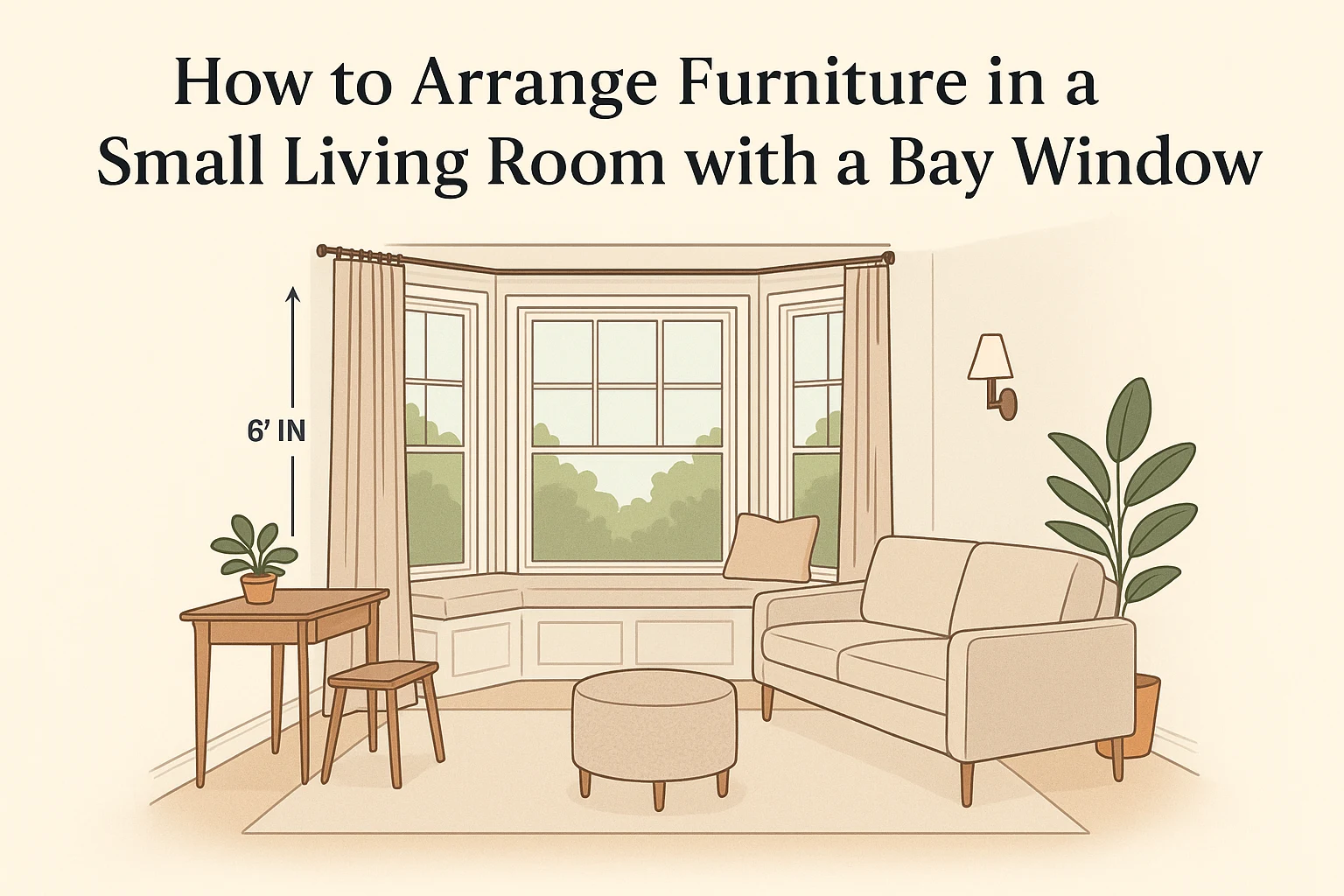
A bay window can feel like a jutting obstacle when floor space is tight, but its angled alcove is actually free square footage waiting to be claimed. Because the walls project outward, the bay:
- Adds bonus depth for built-ins or slim seating
- Funnels daylight deeper into the room (making it read larger)
- Supplies a natural focal point so you don’t have to manufacture one elsewhere
Leaning into those strengths—rather than masking them—is the secret to a functional, airy layout.
According to Wayfair, bay windows typically extend 18 to 24 inches outward, creating a pocket of usable space without enlarging the room’s footprint. The shape and depth vary by type:
| Bay Type | Typical Depth | Best Use in a Small Room |
|---|---|---|
| Box Bay Window | 12–18 in. | Built-in seat + storage or shallow console |
| Canted Bay Window | 20–24 in. | Loveseat nook or dining banquette |
| Bow Window | 16–22 in. | Reading chaise or plant display |
Why start here? Once the bay has a purpose—window bench, book-lined seat, media cabinet—every other piece naturally orients around it.
Contents
Anchor Seating Around the View—Not Against the Glass
It’s tempting to push a sofa straight into the bay, but that usually backfires. You end up blocking the light funnel, boxing in the window, and sitting with your back to the very thing that makes the room feel special.
A better move: float your seating around the bay, not into it.
- Place a slim-armed sofa opposite the bay, leaving at least 12 inches between the sofa back and any baseboard heaters or radiators. This keeps air and light flowing behind you—and avoids that chilly “back against glass” feeling.
- Angle two slipper chairs near the bay’s side walls to form a soft semicircle. They create a conversational nook that feels open and grounded, catching natural side-light without blocking the bay’s central view.
- If your room is less than 10 feet deep, scale carefully: choose a sofa no more than 34 inches deep, and opt for raised legs (4 to 6 inches high) to keep the sightline to the floor clear. That little air gap under the furniture tricks the eye into seeing more space.
Circulation checkpoint: Maintain a 30–36 in. aisle from the front edge of the sofa to the coffee table, and another 24–30 in. from coffee table to bay bench, so traffic can snake comfortably to the windows.
Turn the Bay Into Bonus Seating and Storage
Don’t let that beautiful bay just sit there—put it to work. With just 16–18 inches of depth and a seat height around 17–19 inches (basically the size of a dining chair), a custom window seat can pack in loads of hidden function without crowding the room.
Here’s what you gain:
- Hidden drawers or lift-up lids for storing throws, games, or out-of-season pillows
- A built-in perch that’s perfect for extra guests, reading nooks, or morning coffee
- A front-row seat to the outdoors, whether it’s garden greenery or a buzzing street view
No budget for full built-ins? No problem. A ready-made storage bench paired with two thick seat cushions can deliver most of the look and all of the utility.
To level up the design, flank the bench with tall, slim bookcases—just make sure they’re no deeper than the seat itself. This frames the bay like a feature wall and gives your room a polished, intentional vibe.
Bonus tip: Stick to light finishes or open shelving to keep the setup feeling airy—not boxed in.
Float, Don’t Shove: The Coffee Table and Rug Equation
Bay windows often create irregular footprints—walls that angle inward, corners that taper. That’s why a standard rectangular coffee table can feel clunky or tight.
Instead, go for a round or oval table that echoes the curves of the bay and glides more easily through narrow spots.
Coffee Table Sizing Tips
- For compact sofas (70 inches or shorter), stick to a table that’s 24 to 30 inches in diameter.
- Maintain 14 to 18 inches between the table edge and the sofa—enough room to stretch your legs, but still within arm’s reach for a coffee cup or book.
Rug Rules for Small Bay Rooms
A well-placed rug does more than warm up the floor—it visually unifies the seating zone, smoothing out the bay’s quirky geometry.
- Choose a rug that’s large enough for the front legs of your sofa and chairs to rest on it.
- Even if the room narrows at the bay, let the rug run wide enough to form a grounded “raft” under the furniture.
This floating layout keeps the center breathable while anchoring your seating area in a cohesive footprint—making even asymmetrical rooms feel calm and balanced.
Sample Space-Efficient Layouts for Bay Window Rooms
Every bay window is a little different—but these three proven blueprints show how to unlock function, flow, and comfort in tight spaces, no matter your room’s shape.
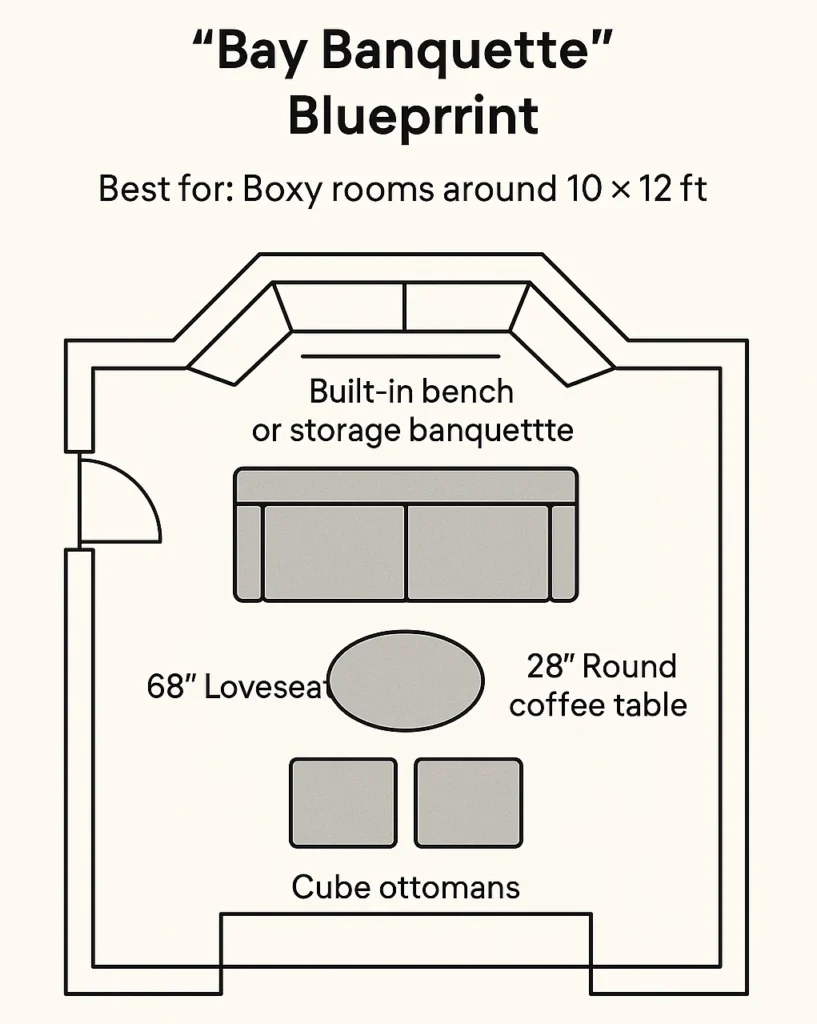
A. “Bay Banquette” Blueprint
Best for: Boxy rooms around 10 × 12 ft
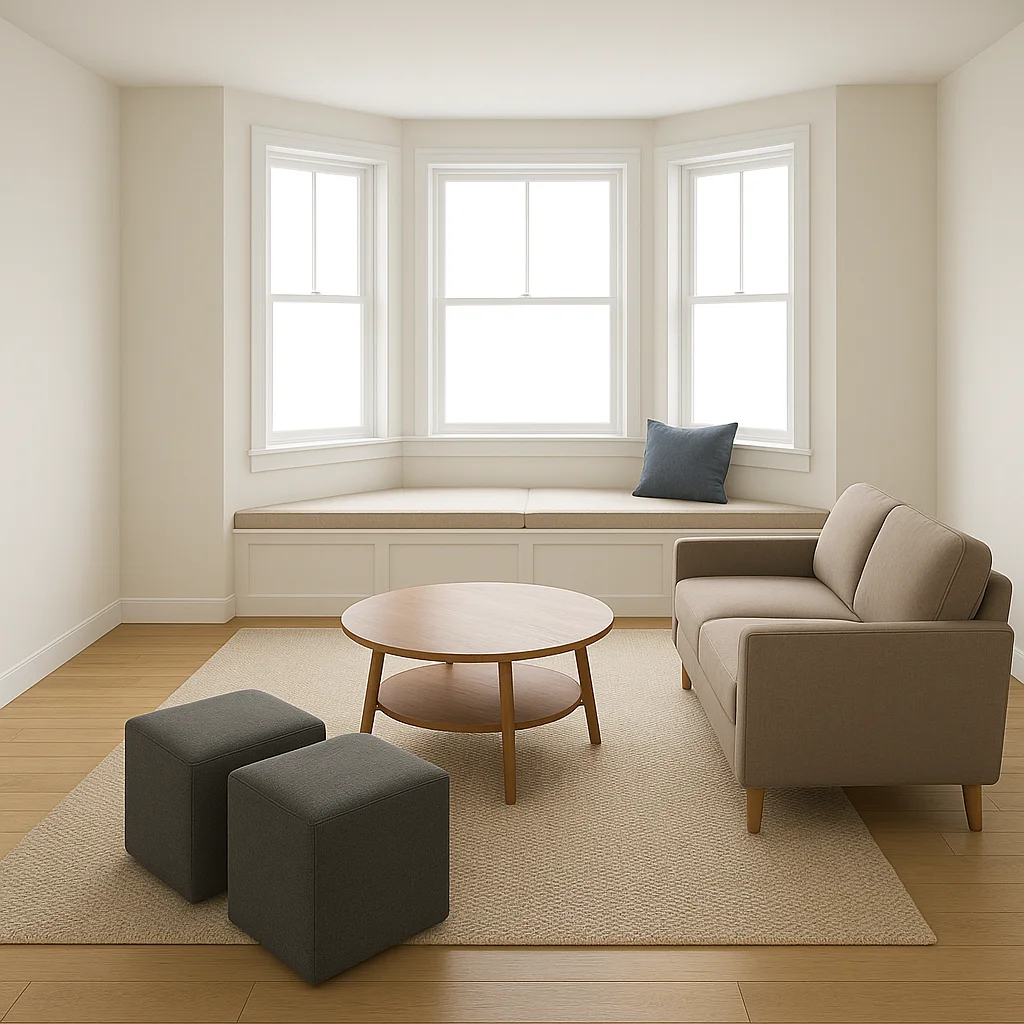
If your bay window stretches wide across the short end of a rectangular room, use it as a built-in bonus. This layout transforms the bay into a seating anchor—while keeping the center of the room open and versatile.
Layout Details:
- Install a built-in bench or storage banquette across the full width of the bay. You can also substitute a ready-made storage bench with cushions.
- Float a 68-inch loveseat centered opposite the bench, creating balance and symmetry.
- Between them, place a 28-inch round coffee table, leaving 16 inches of space to the sofa and 14 inches to the bench—enough for comfortable circulation and knee room.
- Tuck two cube ottomans under the coffee table. They disappear when not in use and pop out for casual guest seating or movie night.
The banquette gives the bay purpose without blocking the view or daylight, while the central layout keeps the conversation zone tight and traffic-friendly. The ottomans add flexibility without visual clutter.
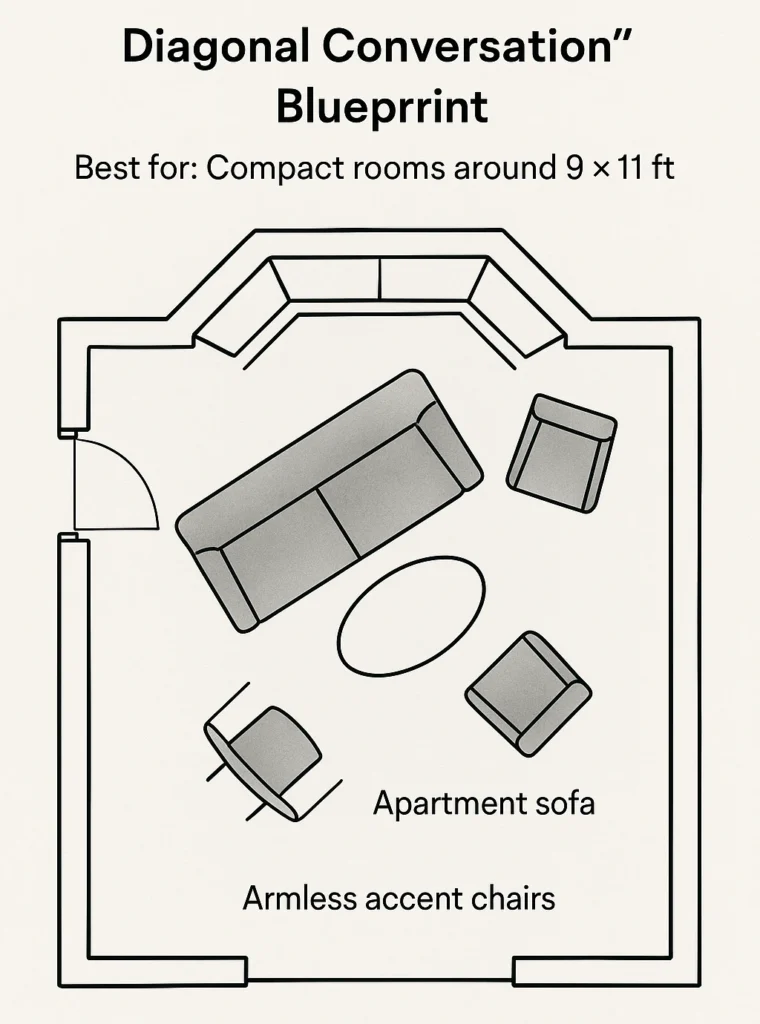
B. “Diagonal Conversation” Blueprint
Best for: Compact rooms around 9 × 11 ft
In smaller square or slightly rectangular rooms, a diagonal layout can work wonders—it softens boxy dimensions, keeps the bay in view, and creates an unexpectedly dynamic conversation zone.
Layout Details:
- Angle a 70-inch apartment sofa so its front-left corner points toward the center of the bay window. This sets the tone and opens up corner space.
- Add two armless accent chairs positioned behind and to the sides of the sofa’s angled back, forming a loose triangle with the bay view as the visual anchor.
- Use oval nesting tables in the center. These are compact, versatile, and easy to slide around—perfect for entertaining or cozy reading time.
The angled sofa breaks up straight sightlines, encouraging movement and conversation while keeping the room feeling open. Bonus: it keeps one side of the bay fully visible and unblocked.
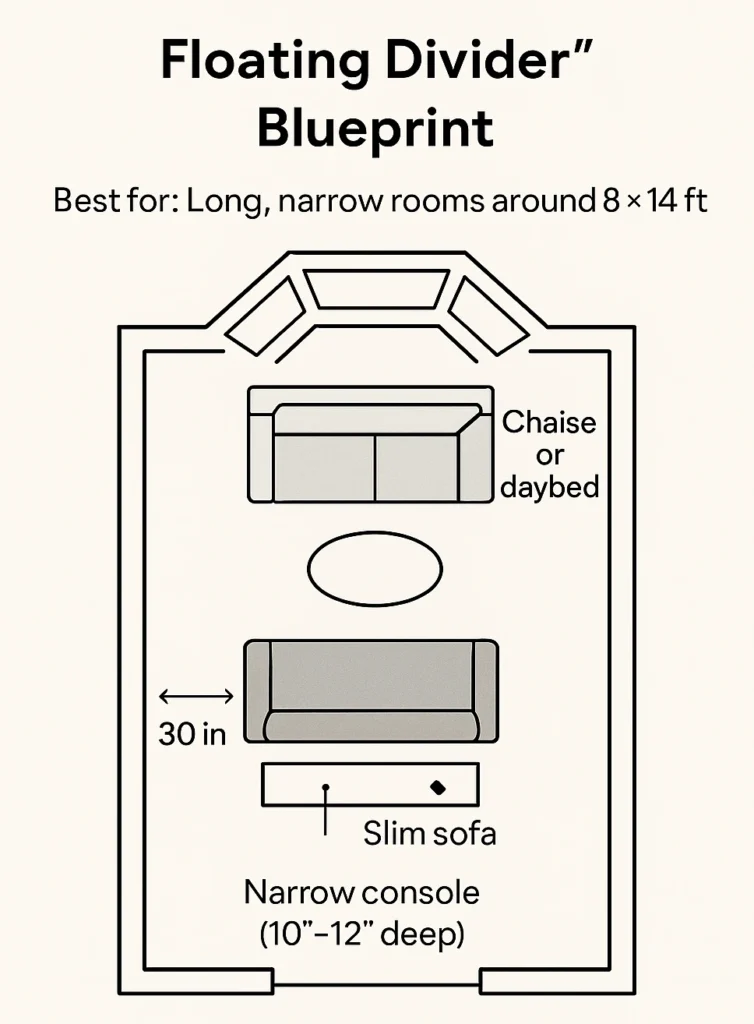
C. “Floating Divider” Blueprint
Best for: Long, narrow rooms around 8 × 14 ft
When a room is more of a corridor than a square, your best bet is to embrace the shape—using furniture to subtly divide space without sacrificing flow. This layout treats the bay as a retreat, not the centerpiece.
Layout Details:
- Float a slim sofa about 30 inches forward of the bay window. Its back acts as a soft divider, separating the lounge zone from the walkway behind it.
- Add a narrow console (10–12 inches deep) behind the sofa for mail, keys, or even a task lamp—doubling as a makeshift entry table if needed.
- Nestle a chaise or daybed into the bay interior. It’s a natural fit for reading, napping, or basking in the afternoon light—without clogging circulation.
This arrangement maintains an open feel along the room’s length, while zoning off the bay as a destination nook. It’s especially useful in multipurpose rooms where the entry door and windows fall on the same short wall.
Choose Light-Lifting Furnishings
In a small living room with a bay window, heavy or oversized furniture can block the very thing you’re trying to showcase: light and openness. Instead of anchoring the room with visual weight, choose pieces that feel airy, compact, and elevated—literally and visually.
Here’s how to swap smart:
| Swap This | For This | Why It Works in a Bay-Front Room |
|---|---|---|
| Bulky roll-arm sofa | Tight-back, slim-arm loveseat | Saves 6–8 inches in depth and keeps light flowing past the arms without crowding the bay |
| Chunky wood coffee table | Glass-top or acrylic table | Transparent surfaces let light pass through and extend your sightline to the floor |
| Tall bookcase behind sofa | Low-profile credenza or bench | Keeps the bay visible and daylight unblocked; helps the room feel less “walled in” |
Wherever possible, choose furniture with:
- Exposed legs (4–6 inches off the floor)
- Heights under 32 inches
These allow natural light from the bay to skim over the tops and under the bases, making the whole space feel brighter and more breathable.
In a word, a bay window might seem tricky in a small living room, but with the right layout, it becomes a beautiful asset.